“A brilliantly blended book that, much like queerness itself, transcends genre and blurs boundaries“—Samantha Allen
“A moving and necessary account of the way making history remakes ourselves“—Jenn Shapland
- The Bitter Southerner – Summer Reading Roundup, 2022
- Lambda Literary – Most Anticipated LGBTQIA+ Books of December 2021
- Southern Review of Books – Best Southern Books of December 2021
Living Queer History is now available wherever books are sold. (Please consider paying a little extra and supporting Roanoke’s own independent bookstore, Book No Further!)
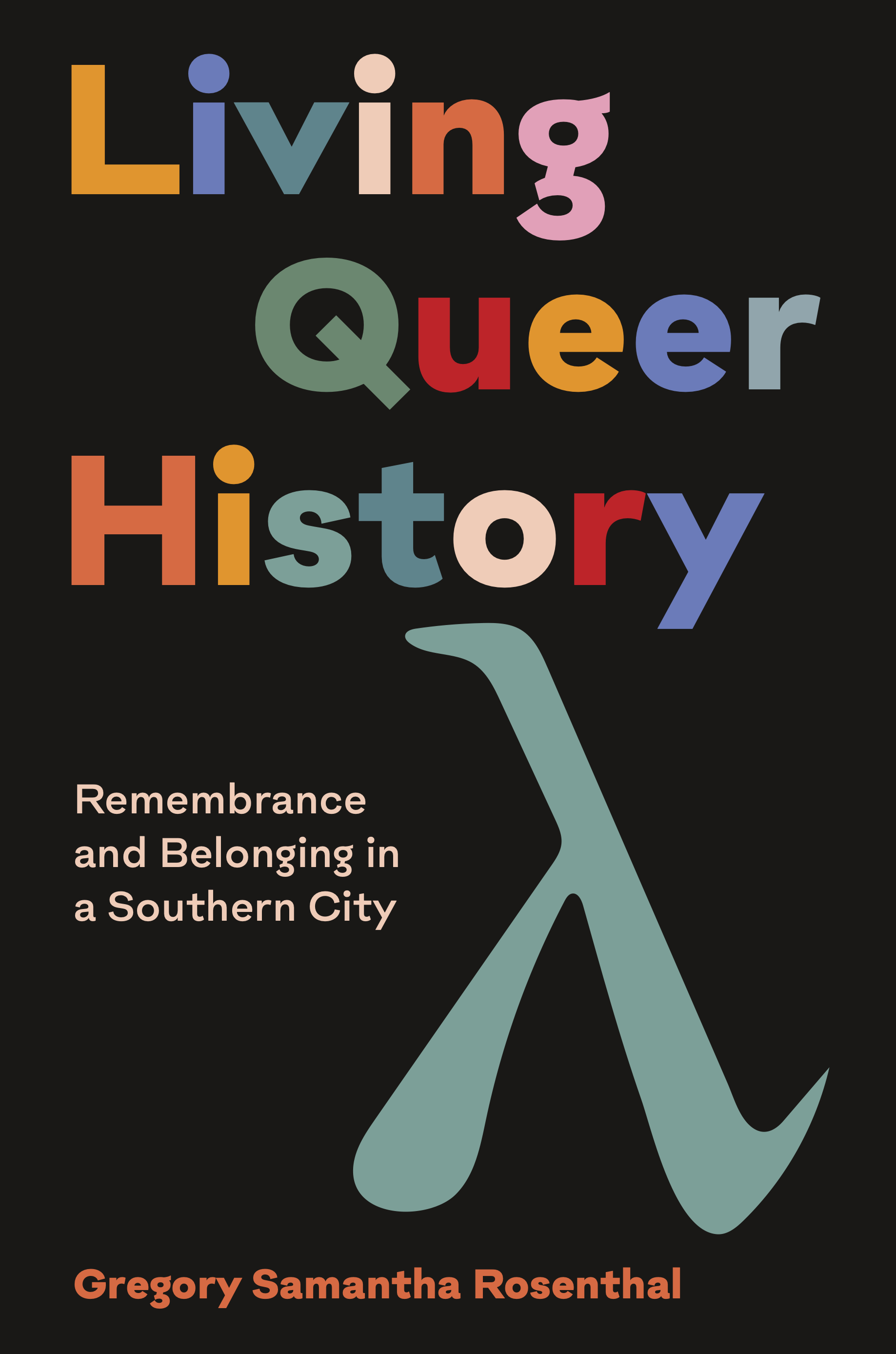
Queer history is a living practice. Talk to any group of LGBTQ people today, and they will not agree on what story should be told. Many people desire to celebrate the past by erecting plaques and painting rainbow crosswalks, but queer and trans people in the twenty-first century need more than just symbols—they need access to power, justice for marginalized people, spaces of belonging. Approaching the past through a lens of queer and trans survival and world-building transforms history itself into a tool for imagining and realizing a better future.
Living Queer History tells the story of an LGBTQ community in Roanoke, Virginia, a small city on the edge of Appalachia. Interweaving historical analysis, theory, and memoir, Samantha Rosenthal tells the story of their own journey—coming out and transitioning as a transgender woman—in the midst of working on a community-based history project that documented a multigenerational southern LGBTQ community. Based on over forty interviews with LGBTQ elders, Living Queer History explores how queer people today think about the past and how history lives on in the present.
Reviews
“Living Queer History is at once a guidebook for organizers, a memoir, and a manifesto for public history activism… Samantha [Rosenthal] makes the case for ‘living history,’ as contrasted with historical preservation, and thoughtfully explores the conundrums faced by activist-archivists who must navigate the ever-fine lines between inclusion and exclusion, memory and erasure, memorialization and trespass. Against the often harmful norms of history-making, she re-envisions history as an active, lived practice, rooted in community. To be a public history activist, she argues, is to not only look back but also to look around, to the physical spaces that can be present-day sites of connection and belonging.”—Emily Alex, Full Stop (read the full introduction to our interview here)
“Living Queer History is a love letter to the queer and trans community… Weaving together memoir with historical analysis and theory, Rosenthal argues that LGBTQ history matters not only to our collective understanding of the past but also to queer and trans lives in the present… [This] book is a valuable contribution to the fields of American history, public history, urban history, and women’s and gender studies. By combining her personal story with her public history work and theoretical frameworks, she expertly shows how important it is for LGBTQ communities to collectively organize, engage in storytelling, and make spaces that are informed by our history yet enable our present and future.”—Kristyn Scorsone, Journal of the History of Sexuality (read the full review here)
“Living Queer History provides a case study and critical handbook for intersectional, community-driven efforts to revive the queer past in the present… All who encounter this remarkable study will find valuable insights on how to extend the methods and analytical lenses of queer oral history into ambitious collective efforts to bring the past to life and give it new meaning today.”—Nikita Shepard, Oral History (read the full review here)
“Living Queer History is no ordinary academic monograph… [This book] provides an inspirational example of the tangible differences LGBTQ+ public history projects can make in the lives of queer community members across multiple generations. Living Queer History provides a model of how we can collectively make the past usable—not for academic institutions or urban developers—but for queer people today and in the future.”—Lauren Jae Gutterman, QT Voices (read the full review here)
“Living Queer History is a moving, deeply personal story about queer southern belonging with wisdom relevant to other public historians. In 2023, as many southern legislatures attempt to restrict drag and criminalize queer youth, queer public history bolsters our fight for our rights as southern queers to ‘remembrance and belonging.’”—Elissa Branum, Southern Historian (read the full review here)
“This is a terrific book for anyone interested in public history projects, queer Appalachia, or the importance of space and place in public memory. Its optimistic view, the energized voice of the author, and its blunt honesty make for engaging and inspiring reading.”—Greta Rensenbrink, West Virginia History (read the full review here)
Advance Praise
“A brilliantly blended book that, much like queerness itself, transcends genre and blurs boundaries. Using memoir to look outward and history to look inward, Rosenthal makes theory concrete, finds the past in the present, and brings Roanoke’s overlooked queer demimonde to beautiful life.”—Samantha Allen, author of Real Queer America: LGBT Stories from Red States
“A moving and necessary account of the way making history remakes ourselves, Living Queer History asks what it means for a queer person to have a place and to take up space in a straight world. With keen insight into their own queer life, Samantha Rosenthal combines personal narrative, oral history, activism, and queer theory to offer a fuller understanding of queer belonging.”—Jenn Shapland, author of My Autobiography of Carson McCullers
“In Living Queer History, Samantha Rosenthal revels in the wondrous history of Roanoke’s storied queer past and present. At once deeply personal and political, this book reminds us that the South is not just home to sexual dissidents but is also a place of transition and transformative queer world-making.”—E. Patrick Johnson, author of Sweet Tea: Black Gay Men of the South
“This is an important book, speaking to some of the most contemporary queries and issues relating to LGBTQ people, cultures, and our histories. Carefully attentive to the ways in which race, ethnicity, class, and gender (among other identities and power systems) speak to and with LGBTQ identities of various stripes, the book delivers a persuasive challenge to continuing presumptions that the South has never been a space or place in which LGBTQ people or cultures or communities could emerge, let alone survive and thrive. Rather than a book ‘of history’ it is ultimately a book about history—how it is made, what gets missed or elided by even the most well-meaning of scholars.”—Leisa Meyer, author of Creating G.I. Jane: Sexuality and Power in the Women’s Army Corps During World War II
 G. Samantha Rosenthal, Ph.D.